
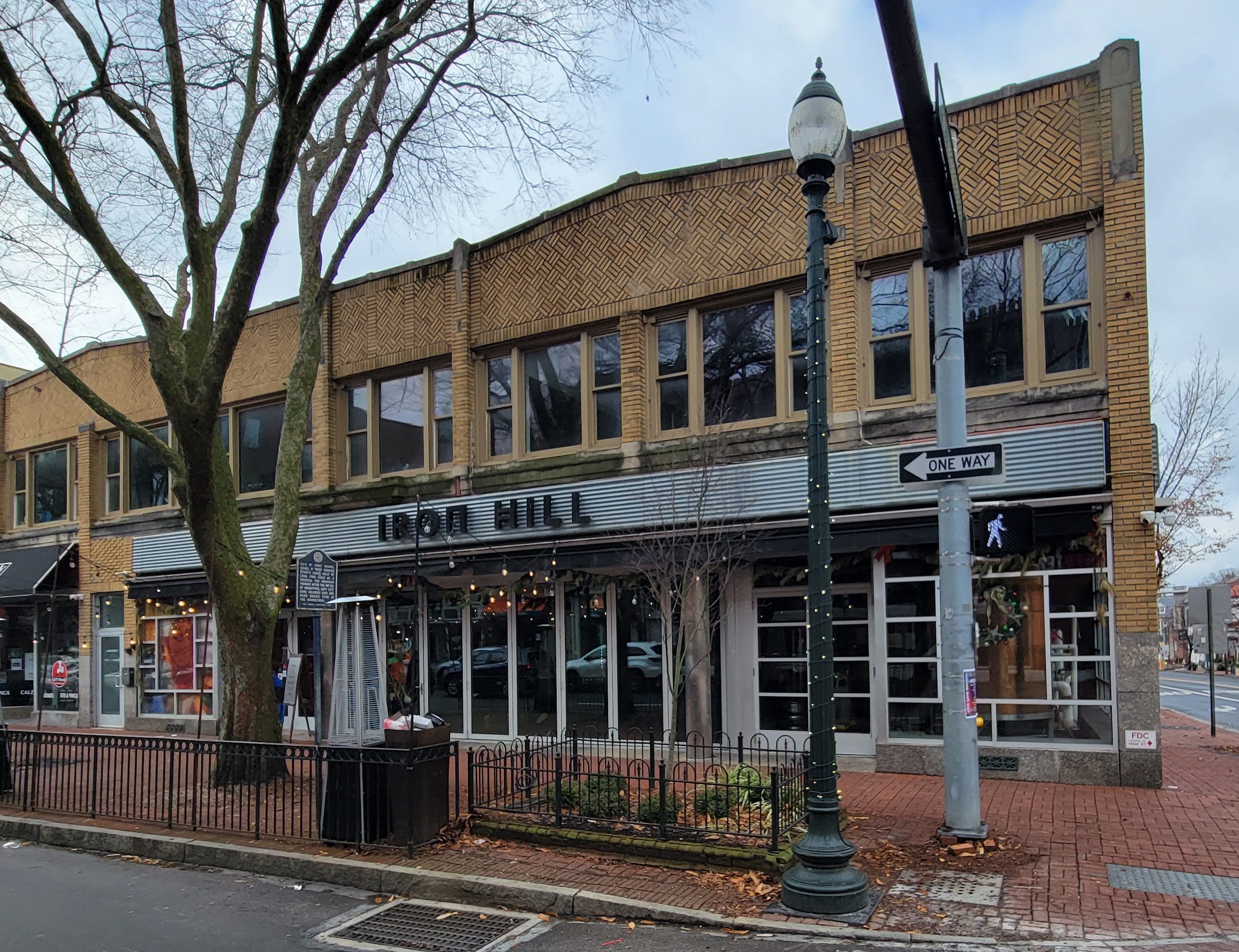
Most working people in the U.S. do not believe we have a functioning democratic government that represents our political will in policy. For example, nearly 60% of U.S. adults are dissatisfied with the way their democracy is functioning. Close to all U.S. adults, 85%, reported that the political system either needs major changes, 43%, or it needs to be completely reformed, 42% [1]. It is clear that when asked to think about government in general nearly everyone senses deep structural issues as far as a functioning democracy is concerned.
However, when it comes to peoples’ views about local government Gallup found that nearly 70% of Americans trust their local state apparatus while only 32% trust it at the federal level [2]. It is our intention to demonstrate that local trust in government is misplaced and that this misplaced trust presents a barrier to organizing. That is, if we trust our local governments, then why would we question their policy initiatives let alone challenge them?
What follows, using “revitalization” initiatives in West Chester as an example, is an argument that even our local governments, from the perspective of workers, are not democratic and therefore not trustworthy. In other words, we want to show that just as corporations and the rich control the federal government, they also control local governments. In a capitalist economy where there is an inherent, structural antagonism between the working class and the capitalist class, policies that benefit the rich like revitalization, tend to hurt working people at the same time.
So what is revitalization and how does it reflect the class character of local city governments? In a previous article, outlining the class character of Coatesville city government, we demonstrated how it’s revitalization plan is designed to facilitate wealth extraction and the displacement of predominantly Black, working-class residents. What follows is a brief explanation of how West Chester’s revitalization plan is also designed to benefit the capitalist class at the expense of the borough’s working-class neighborhoods.

Revitalization
In 2003 West Chester officially adopted an “Urban Center Revitalization Plan,” which continues to play a central role in the borough’s Comprehensive Plan. The Plan was funded by Chester County’s Vision Partnership Program, which exists to fund municipality’s improvement projects throughout the County. West Chester revitalization is regarded as a major success. The “success” of revitalization efforts in West Chester, from the perspective of the capitalist class, is attributed to “the work of the West Chester Business Improvement District” (BID) which is funded, in part, by “the borough’s parking revenues” [3].
The BID was started in 2000 and has been reauthorized consistently every five years. With each re-authorization BID issues a Five Year Plan. It consists of 15 members appointed to 5 years terms. The “diverse” array of mostly business interests represented in BID‘s members, are charged with enhancing “the economic vitality of downtown West Chester through an active public private partnership between Borough government and the business and property owners in the Business Improvement District.”
West Chester has also partnered with Main Street America, an organization of business interests that boasts to have “helped” more than 2000 communities throughout the U.S. revitalize. Under Main Street America is the National Trust for Historic Preservation. In a 2022 highly celebratory article titled, “How West Chester, Pennsylvania, Turned its Sleepy Downtown into a Popular Destination,” published by the National Trust, notes that in 1973 the Exton Square Mall opened six miles from West Chester’s downtown signaling its decline.
What the article is suggesting is that the Exton Mall symbolized capital or investor money moving out of West Chester and that by the 1990s property values in the borough were at an historic low. This was a trend across the U.S. and is reflective of how capitalism has an inherent tendency to perpetually migrant to where returns or profits are highest. Once an area is saturated with value and profits begin to diminish, capital picks up and moves again. The Exton Square Mall is now beginning to resemble a ghost town and capital is flowing back into West Chester. As a result, the National Trust article brags that in West Chester the “median home prices have soared to about $500,000” [4].
This is good for investors and profiteers, but for the working class that keeps West Chester alive, soaring property values means looming displacement. It is increasingly difficult for working families to afford to live in the borough. Reflective of this displacement is the dramatic decline in the Black population of West Chester. In 1990 the Census reported that nearly 20% of West Chester’s population was Black. Today, after more than 20 years of revitalization, the Black population of West Chester is approaching just 10%.
For decades organizers have called these measures gentrification. Gentrification is “the process by which poor and working-class people are driven out of their communities due to an influx of capitalist investment in their neighborhoods” [5]. Such capital investments at the heart of gentrification are never intended to improve the lives of the workers, but are intended to improve the profitability of an area for capitalist investors at the expense of the soon-to-be-displaced residents.
Mainstream explanations often depict gentrification as the result of changes in consumption patterns or consumer preferences easily remedied by policy tweaks. Marxists, on the other hand, reject the notion that gentrification is the result of individual choices. Instead, gentrification is understood as the result of the basic laws of capitalist accumulation. It is the product of the way the system of capitalism works in its never-ending drive to accumulate value (i.e. money functioning as capital), in other words. For an in-depth discussion of gentrification see “Understanding and fighting gentrification: A revolutionary orientation.”
In Chester County the word revitalization has been used to confuse people regarding the true nature of what is taking place. The problem is not the result of the decisions or actions of any particular politician. Revitalization is the vision of the capitalist class represented in groupings like Main Street America and the West Chester Business Improvement District. The policy initiatives of investors are mere reflections of the logic of capitalism. The problem is therefore capitalism itself.
What is the State?
Marxist philosophers and organizers have understood for a long time that the state or government, “is a repressive ‘machine’ that enables the dominant classes … to ensure their domination over the working-class in order to subject it to the process of extorting surplus-value” [6]. From this perspective revitalization makes perfect sense. It reflects the way local governments support policies that benefit capitalists, the 1%, even if they hurt working people, who are by far the numerical majority, the 99%. This is not a government for the people. It is a government for the rich. Even at the local level, the level most of us trust, workers have no real representation, and we therefore have no real democracy.
However, there is no guarantee that “the political outcomes of the state will serve the needs of capital” [7]. This is not because the class character of the U.S. government (i.e. the state) is not predetermined, it is. What is not predetermined, or not set in stone, is the capitalist-class’s ability to impose its will on the working class because workers fight back. We do not have to accept revitalization. We can cut through the propaganda that tries to get us to support policies that hurt us, and build a mass movement against them.
More than 100 years ago Lenin noted that bourgeois ideologists exist to confuse workers by arguing that the role of the state is either to create harmony or balance between antagonistically-related social classes, or to reflect the objective will of the voters [8].
Bourgeois ideologists, in their role today, paint anti-worker and often racist policy initiatives, such as “revitalization,” as, astonishingly, pro-worker and progressive. And when we fight back against anti-worker policies, such as revitalization, the political establishment always has the power of the police at hand to push us back. But repression breeds resistance, so the bosses can’t win.
Working People of Chester County Unite!
For many anti-gentrification organizers the task is not to stop development, but to stop displacement. Among the long list of demands aimed at stopping displacement amidst revitalization is rent control, which offers working people protection from sudden spikes in rent [9].
The West Chester Borough government has not responded to the surge in median home prices by enacting rent controls to prevent the largely working class Black community of West Chester from being displaced. Instead, acting on behalf of the capitalist class, the Borough has done what many gentrifying municipalities have done; they have increased the size and presence of the police force helping to displace residents and protect capital investments.
From Coatesville to West Chester the aspirations of the working class are under attack. Our class enemy has been using “revitalization” as a weapon to displace workers and expropriate value from our labor and the communities we have called home for generations. We say no to revitalization and yes to working class community control. Together we can defeat the capitalist intentions of revitalization, stop working-class displacement, and bring real democracy to Chester County.
References
[1] Gallup. https://news.gallup.com/poll/512651/americans-trust-local-government-congress-least.aspx.
[2] Pew Research Center. https://www.pewresearch.org/short-reads/2022/06/30/how-americans-see-their-country-and-their-democracy/#:~:text=A%20majority%20of%20Americans%20are,advanced%20economies%20around%20the%20world.
[3] West Chester Comprehensive Plan. https://www.west-chester.com/DocumentCenter/View/4056/Comprensive-Plan—Final—March-23?bidId=
[4] “How West Chester, Pennsylvania, Turned its Sleepy Downtown into as Popular Destination,” https://savingplaces.org/stories/how-west-chester-pennsylvania-turned-its-sleepy-downtown-into-a-popular-destination.
[5] Joe Tache. “Understanding and Fighting Gentrification: A revolutionary orientation.” Liberation School. January 6, 2022. https://www.liberationschool.org/gentrification-a-revolutionary-understanding/
[6] Althusser, Louis. (1971/2014). On the Reproduction of Capitalism: Ideology and Ideological State Apparatuses. New York: Verso.
[7] Jessop, B. (2001). ‘Bringing the State Back in (Yet Again): Reviews, Revisions, Rejections, and Redirections’, published by the Department of Sociology, Lancaster University, Lancaster LA1 4YN, at http://www.comp.lancs.ac.uk/sociology/papers/Jessop-Bringing-the-State-Back-In.pdf
[8] Vladimir Lenin. The State and Revolution. https://www.marxists.org/archive/lenin/works/1917/staterev/
[9] https://nlihc.org/resource/gentrification-and-neighborhood-revitalization-whats-difference